
An autonomous robot can work independently without human control. The robot uses sensors to detect its surroundings, processes the information, and makes its own decisions about what to do next.
The technology relies on artificial intelligence and machine learning, allowing the robot to learn and adapt its behavior to different situations.
Common examples: Robot vacuum cleaners navigating your home, robot lawn mowers cutting grass, and self-driving cars.

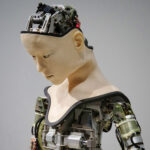
Humanoid robots are designed to look and move like humans. They typically have a head, torso, arms, and legs, allowing them to interact with environments built for people.
These robots can perform tasks that require human-like movements, such as walking, grasping objects, and navigating spaces designed for humans. The human-like design makes them particularly useful in situations where they need to use tools or work in spaces meant for people.
Examples: Tesla Optimus, Figure 01, and Unitree H1 are among the humanoid robots currently in development.
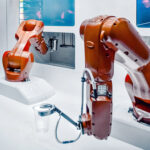
Pre-programmed robots follow a fixed set of instructions to perform the same task repeatedly with high precision. Unlike autonomous robots, they cannot adapt to changes in their environment or make independent decisions.
These robots excel at repetitive tasks that require consistency and accuracy. They are programmed once and then execute the same movements or actions over and over.
Common uses: Assembly line robots in car factories, robotic arms in manufacturing, and automated welding machines.
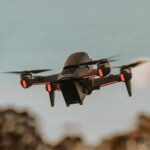
A teleoperated robot (or telerobot) is controlled remotely by a human operator, often from a significant distance. The operator uses controls such as joysticks, consoles, or even virtual reality systems to direct the robot’s movements.
These robots allow humans to work in dangerous or inaccessible environments without being physically present. The robot acts as an extension of the operator, performing tasks that would be too risky or impossible for humans to do directly.
Common uses: Deep-sea exploration, space missions, bomb disposal, remote surgery, and handling hazardous materials.
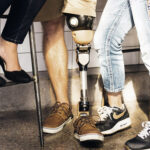
Augmenting robots enhance or restore human abilities rather than replacing human workers. They work alongside people to improve strength, endurance, or mobility.
These robots range from advanced prosthetic limbs that restore movement to people who have lost limbs, to exoskeletons that help workers lift heavy objects or assist people with walking difficulties.
Common uses: Prosthetic arms and legs, industrial exoskeletons for warehouse workers, and mobility assistance devices for people with disabilities.
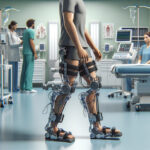
Robots in healthcare assist with surgery, patient care, and rehabilitation. One important application is robotic exoskeletons that help patients regain mobility after injuries or neurological conditions.
These wearable devices provide mechanical support and strength to parts of the body, enabling patients to perform movements they cannot do on their own. They are particularly valuable for people recovering from strokes, spinal cord injuries, or other conditions affecting mobility.
By supporting controlled movement, robotic exoskeletons help patients rebuild muscle strength, improve coordination, and increase range of motion during the recovery process.
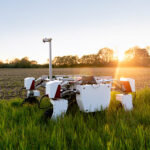
Robots in agriculture automate tasks like planting, harvesting, and monitoring crops. They help farmers increase efficiency, reduce waste, and optimize resource use for more sustainable farming.
Agricultural robots can work around the clock in challenging conditions, performing repetitive or physically demanding tasks that are difficult for human workers. They use sensors and cameras to monitor crop health, detect diseases early, and apply water or pesticides precisely where needed.
This precision farming approach reduces chemical use, saves resources, and improves crop yields. As the technology becomes more affordable, robots are becoming increasingly common on farms of all sizes.
Examples: Autonomous tractors, robotic harvesters, crop-monitoring drones, and automated weeding machines.
Robots in transportation are transforming how goods and people move from place to place. The main goals are improving safety by reducing human error, increasing efficiency through optimized routes, and providing new mobility options.
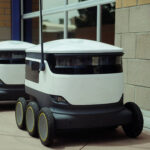
Autonomous delivery robots transport packages and goods without human drivers. These robots vary in size and capability, from small sidewalk robots delivering food in cities to larger vehicles transporting packages between warehouses.
Self-driving vehicles use sensors, cameras, and AI to navigate roads safely. They can operate continuously without rest breaks and make consistent decisions based on real-time data.
Examples: Sidewalk delivery robots, autonomous trucks, self-driving cars, and warehouse transport robots.
Robots are essential for space exploration, performing tasks that are too dangerous, distant, or difficult for humans. They gather scientific data, maintain equipment, and prepare the way for future human missions.
Space robots operate in extreme conditions, intense radiation, extreme temperatures, and zero gravity, where humans cannot survive without extensive life support. They can work for years without rest, exploring distant planets and moons.
Rovers like Mars Perseverance analyze soil and search for signs of past life. Robotic arms on space stations assist astronauts with repairs and construction. Satellites equipped with robotic systems maintain their own orbits and repair themselves.
Examples: Mars rovers (Perseverance, Curiosity), robotic arms on the International Space Station, satellite repair robots, and lunar exploration robots.

Robots in entertainment create engaging experiences for audiences, from theme park attractions to live performances. They serve as performers, companions, and interactive exhibits that showcase technological innovation.
In theme parks, animatronic robots bring characters to life with realistic movements and expressions. Robot performers participate in choreographed dances and theatrical shows. Companion robots interact with people through conversation and games, providing entertainment in homes and public spaces.
Robots also enable spectacular visual displays, such as synchronized drone shows with hundreds of flying robots creating patterns in the sky. In competitions like robot soccer or BattleBots, robots showcase engineering and programming skills while entertaining audiences.
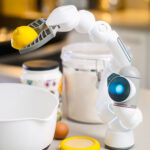
Examples: Disney animatronics, robot dance performances, companion robots like Eilik, drone light shows, and robot combat competitions.

Food preparation robots automate cooking tasks in commercial kitchens, performing actions like cutting, chopping, frying, and plating with consistent precision. These robots use computer vision to identify ingredients and utensils, and machine learning to improve their techniques over time.
By automating repetitive kitchen tasks, these robots help restaurants increase efficiency, maintain consistent food quality, and reduce labor costs. They can work continuously during peak hours without fatigue, ensuring fast service even during busy periods.
Some robots specialize in specific tasks like making pizzas or flipping burgers, while others are more versatile kitchen assistants. As the technology advances, these robots are becoming common in fast-food chains, cafeterias, and large-scale food production facilities.
Examples: Pizza-making robots, automated burger flippers, robotic bartenders, and AI-powered cooking assistants.
Military robots perform dangerous tasks to keep soldiers safe, including bomb disposal, reconnaissance, and surveillance. They operate in hazardous environments like contaminated zones or extreme heat where human presence would be risky.
Drones conduct surveillance and monitor enemy movements from the air. Ground robots detect and defuse explosives or search dangerous buildings. Underwater robots perform naval reconnaissance missions.
These robots work continuously without fatigue and can access areas too dangerous for humans, improving military effectiveness while reducing personnel risk.
Every robot consists of three essential parts that work together. Sensors gather information about the environment, such as detecting obstacles or measuring distances. Actuators are the motors and mechanisms that create movement, allowing the robot to perform physical actions. The control system is the “brain” that processes sensor data and tells the actuators what to do.
These components work in a continuous loop: sensors collect data, the control system makes decisions, and actuators execute actions. This cycle repeats constantly, allowing robots to interact with their surroundings and complete tasks.
Examples: Cameras and ultrasonic sensors detect objects, electric motors move robot arms, and onboard computers coordinate all actions.

The main difference between AI-powered robots and programmed robots lies in how they make decisions. Programmed robots follow fixed instructions written by humans, performing the same actions the same way every time.
AI-powered robots, on the other hand, use machine learning and data-driven algorithms to adapt their behavior based on experience and changing conditions. They can recognize patterns, learn from mistakes, and handle situations they weren’t explicitly programmed for.
Most modern robots combine both approaches: programmed rules govern basic operations, while AI handles more complex, adaptive tasks.
Examples: A programmed factory robot repeats the same welding pattern consistently. An AI-enabled robot vacuum learns the layout of a home and adjusts its cleaning route over time.

Robot safety focuses on preventing harm to humans, both physically and economically. Physical safety includes sensors that detect human presence, emergency stop systems, compliant designs, and safeguards that minimize injury risk during malfunctions or unexpected interactions.
Ethical concerns often center on job displacement, as robots automate tasks previously performed by humans. While robotics can create new roles in engineering, programming, and maintenance, they may reduce employment in sectors such as manufacturing, logistics, and certain service industries.
Privacy is also a key issue. Robots equipped with cameras, microphones, and other sensors collect data about people and their surroundings. Clear policies are needed to define what data can be collected, how it is used, and how it is stored.
Key considerations include establishing regulations to ensure robots meet safety standards, implementing retraining programs to help workers transition to new roles, and promoting transparency in data collection to maintain public trust.
